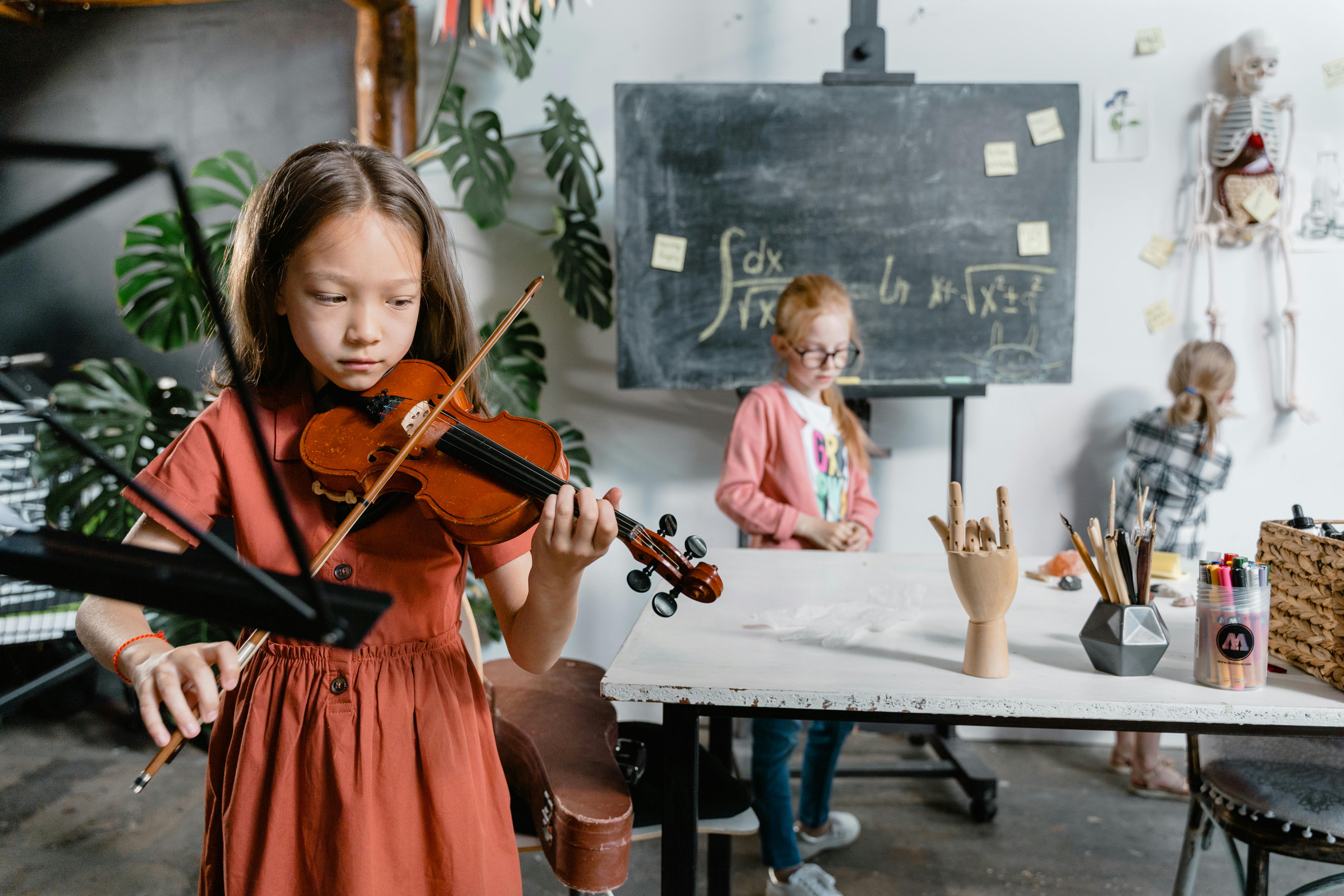
Reimagining Music Education: From Rigid Discipline to Emotional Intelligence and Creativity
Music education has evolved significantly over the past century, mirroring broader shifts in how we understand learning, psychology, and human well-being. For many years, prestigious schools of thought like the Russian music school stood as pillars of excellence, producing some of the world’s most technically accomplished musicians. However, the methodology behind this excellence was often rooted in a system that prioritized technical mastery, relentless practice, and competition—sometimes at the cost of the student’s emotional well-being and mental health.
Today, a more holistic, student-centered approach is emerging, one that values happiness, emotional intelligence, creativity, and mental well-being as crucial elements of musical success. This shift reflects a deeper understanding that nurturing the mind and spirit is just as important as cultivating technical skill.
The Old School: Discipline, Technique, and Competition Above All
In the traditional methodologies, particularly exemplified by the Russian music school, the focus was almost exclusively on technique and discipline. Students were trained to achieve an almost machine-like perfection through rigorous, long hours of practice. A clear example of this is the methodologies of authors like Okatar Sevcik. This approach valued precision, often imposing strict routines that left little room for individual emotional expression, improvisation, or creative exploration. And I highly believe that those methodologies are an important an efficient part of the violin practice and I do them almost every day, but it is more like a medicine that should be applied carefully and in the propper dose.

Instructors frequently employed harsh criticism, believing that tough love would forge resilience and dedication. This method often fostered a sense of competition—not just between students, but internally within the student themselves, creating a relentless pressure to outperform. The underlying belief was that the path to mastery lay in intense repetition and comparison to peers.
One famous maxim captures this ethos: „Practice makes perfect.“ While undeniably true to an extent, the flaw in this system was the narrowness of its focus. Students were sometimes treated more like instruments themselves, rather than as human beings with individual needs, emotions, and personalities. The emotional and mental health of the student was secondary, if considered at all. After all, emotions, vulnerability, and creativity were perceived as secondary to sheer technical prowess.
The New School: Emotional Well-being, Creativity, and Holistic Learning
Fortunately, modern approaches to music education are redefining what it means to be a musician. More and more educators are embracing a philosophy where the happiness and emotional well-being of the student are seen as crucial to their success—both as musicians and as individuals. This transformation in pedagogy reflects a broader understanding of how human beings learn and thrive.
Today, educators are moving away from rigid, one-size-fits-all methods. They are adopting approaches that prioritize balance and efficiency in practice. Instead of grinding through hours of rote repetition, students are encouraged to practice intelligently—targeting weak areas, practicing mindfully, and making efficient use of their time.
Moreover, the importance of mental health is now acknowledged. Teachers strive to create a supportive, nurturing environment where students feel comfortable expressing their emotions. It is recognized that fear and anxiety do not foster artistic expression—rather, they stifle it.
“Competition is for horses, not artists.” Béla Bartók.
Creativity and Improvisation: Expanding the Role of the Artist
Another exciting aspect of this new approach is the emphasis on creativity, improvisation, and emotional expression. Rather than limiting students to technical exercises, many modern music programs incorporate opportunities for improvisation and creative exploration. This not only allows students to connect more deeply with their instruments and their own musical voices but also nurtures problem-solving skills and musical intuition.
Improvisation also enables students to break free from the anxiety of perfectionism that often plagued the old methodologies. In the past, students were trained to perform pieces exactly as written, with little room for personal interpretation. In contrast, today’s students are encouraged to explore, make mistakes, and learn from them—developing a deeper, more personal connection with the music.
This creative freedom allows students to experience the joy of music as an expressive art form, not just a technical challenge. By exploring improvisation, students are reminded that music is a living language, a form of emotional communication, and not just a series of correct notes to be played.
Emphasizing Emotional Intelligence
The understanding of students‘ emotions and psychology is now a priority in modern teaching methods. Teachers today recognize that each student is unique, with individual emotional landscapes and psychological needs. A student-centered approach means that educators work with the student’s personal strengths and weaknesses, tailoring their teaching to not only address technical growth but also emotional and psychological development.
Understanding emotions is also key to musical interpretation. In contrast to the rigid performance style favored in the traditional approach, today’s music educators help students connect with the emotional core of the pieces they are playing. This not only enhances the student’s personal connection to the music but also helps them convey the depth and nuance that audiences respond to in live performance.
Balance Between Discipline and Joy
One of the most significant changes in contemporary music education is the focus on finding balance. Technical skill is still important, but it is not the only thing that matters. The new methodology encourages efficient practice, with an emphasis on quality over quantity. Students are taught to listen to their bodies and minds, avoiding burnout and injury, both physical and emotional.
While students are still encouraged to work hard, they are also taught to find joy in the process. This joy fuels long-term motivation, rather than the short-lived drive to simply “be the best.” As students learn to manage their time and energy effectively, they are better able to sustain a fulfilling, lifelong relationship with music.
Conclusion: A New Harmony in Music Education
The evolution of music education reflects a broader shift towards more holistic, compassionate, and human-centered approaches to learning. While the old school of thought, rooted in discipline, technique, and competition, undeniably produced brilliant musicians, it often did so at a high personal cost.
Today, we are moving towards an approach where mental health, happiness, creativity, and emotional understanding are integral to the process of becoming a musician. As Béla Bartók’s words remind us, music is an art, not a race. The true essence of music lies not in technical perfection but in emotional expression, connection, and the freedom to explore one’s creative potential.
In this new paradigm, students are not just training to be flawless performers—they are learning to be whole, expressive artists. And in that transformation lies the future of music education.